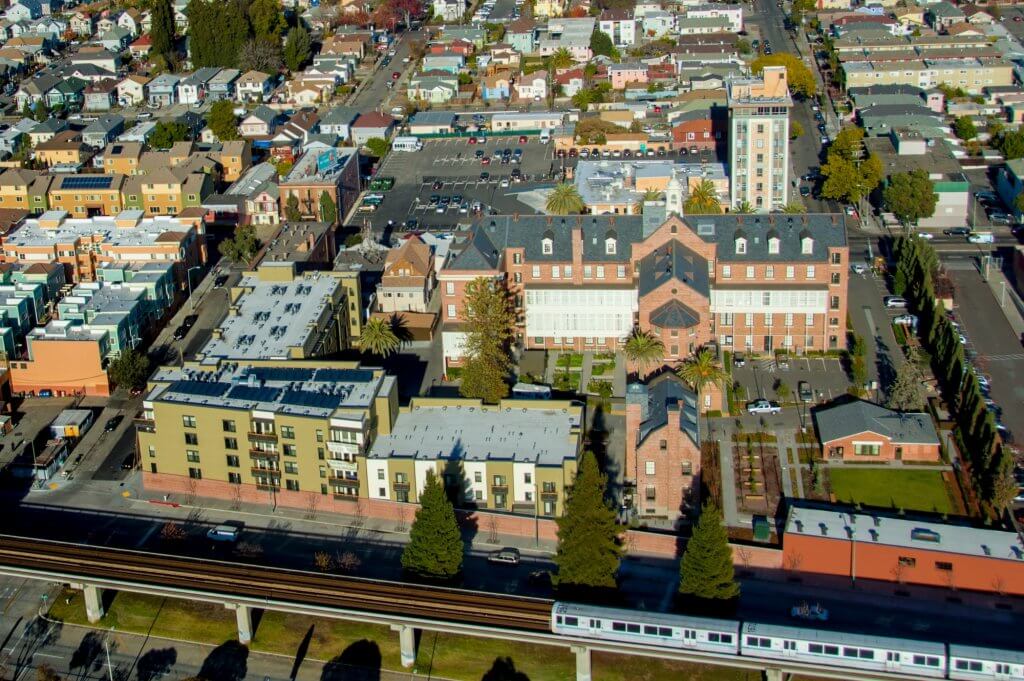
Punitive to Rehabilitative: Strategies for Live-Work Preservation in Oakland
Published On May 1, 2018

Punitive to Rehabilitative: Strategies for Live-Work Preservation in Oakland
Community Development Studio, Spring 2018
Authors: Viktor Bensus, Irene Calimlin, Anna Cash, Scott Chilberg, Reshad Hai, Eli Kaplan, and Aline Tanielian
On December 2, 2016, thirty-six people died in a fire at the Ghost Ship warehouse space in Oakland, most of whom were there visiting for a show. This tragic loss of life brought to the forefront live-work spaces as an overlooked type of housing in Oakland. While retrospectively the conditions at the Ghost Ship warehouse were exceptionally unsafe, the tragedy raised life-safety questions about other nonconforming spaces, and especially do-it-yourself (DIY) warehouses. While not all spaces represent the same safety risk that Ghost Ship did, there are many steps that can be taken to make these spaces safer without displacing residents.
Share This Post:
Related Articles
Modeling Inclusionary Zoning’s Impact on Housing Production in Los Angeles: Tradeoffs and Policy Implications
Guest author Shane Phillips from the UCLA Lewis Center for Regional Policy Studies has authored a paper that uses…

California’s Prohousing Designation Program: Rewarding City and County Policies that Boost Housing Supply
In this paper, we examine data for 10 early adopters of California's Prohousing Designation Program, and assess whether the policies…
Residential Housing Is Now Allowed in All Commercial Zones: Are California Cities Ready?
Overview California Assembly Bill 2011 (Wicks) was signed into law by Governor Newsom in September 2022 and went into effect…

The Housing Potential for Land Owned by Faith-Based Organizations and Colleges
This paper updates our 2020 report with expanded data on the potential for development on land owned by faith-based organizations…